By Moses Welfare Foundation
Food is more than a basic necessity.
For a child, nutritious food supports growth, learning, and healthy development. For a mother, adequate nutrition during pregnancy and breastfeeding can affect both her wellbeing and her child’s future. For a family living in poverty, however, putting enough nutritious food on the table every day can become a difficult struggle.
Pakistan continues to face significant challenges related to food insecurity, poverty, and malnutrition.
The World Food Programme currently reports that 20.7% of Pakistan’s population is undernourished and around 40% of children under five are stunted. WFP also reports that food insecurity persists across many districts. (World Food Programme)
The challenge is not simply whether families have something to eat.
It is whether they can consistently afford enough safe, nutritious, and diverse food.
At Moses Welfare Foundation, we believe that no family should have to choose between feeding their children and meeting another essential need.
What Is Food Insecurity?
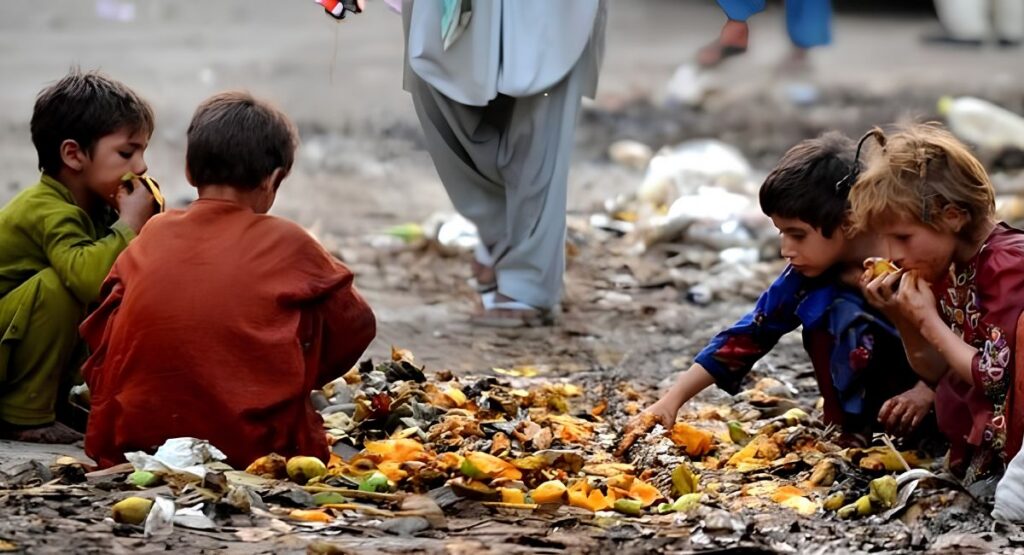
Food insecurity occurs when people do not have reliable access to enough safe and nutritious food for normal growth, development, and an active, healthy life.
It can take different forms.
A family may:
- Have too little food
- Skip meals
- Reduce portion sizes
- Depend on cheaper, less nutritious foods
- Borrow money to purchase food
- Reduce the variety of their diet
- Sacrifice healthcare or education to buy food
- Go without food during difficult periods
Food insecurity can therefore exist even when a family is eating something every day.
The deeper question is:
Can the family consistently afford a healthy and nutritious diet?
The Current Food Security Situation in Pakistan
Pakistan’s food-security situation is influenced by several interconnected factors, including poverty, food prices, climate shocks, limited livelihood opportunities, and disruptions to agricultural production.
FAO’s February 2026 country brief reported that about 10 million people were estimated to face high levels of acute food insecurity between April and July 2025, down from approximately 11 million during November 2024–March 2025. However, FAO also warned that severe flooding in 2025 affected at least 5.8 million people, damaging homes and infrastructure and causing losses of livestock and food stocks. (FAOHome)
FAO further reported that wheat-flour prices increased by approximately 50% to 90% in most markets between July 2025 and January 2026, reaching near-record levels. (FAOHome)
These pressures matter because wheat and wheat flour are central to the diets of many Pakistani households.
When the price of a staple rises sharply, poor families are often among the first to feel the impact.
When Food Becomes Unaffordable
Imagine a family with a very limited monthly income.
They need to pay for:
- Food
- Rent
- Electricity
- Healthcare
- Transportation
- Children’s education
- Clothing
- Other household necessities
If food prices rise while household income remains the same, something has to give.
Families may respond by:
Buying less food.
Choosing cheaper foods.
Reducing the variety of meals.
Skipping meals.
Borrowing money.
Reducing spending on healthcare or education.
These coping strategies may help a family survive today, but they can create serious long-term consequences.
Poverty and Hunger Are Closely Connected
Food insecurity is often a symptom of wider economic vulnerability.
A household with stable income is generally better positioned to respond when food prices rise.
A household living from one day’s earnings to the next has far fewer options.
For a low-income family, even a relatively small increase in the cost of flour, rice, pulses, cooking oil, or vegetables can create additional pressure.
This is why addressing hunger requires more than food distribution.
It also requires:
- Livelihood opportunities
- Social protection
- Affordable nutritious food
- Healthcare
- Education
- Agricultural resilience
- Emergency assistance
Children Are Among the Most Vulnerable
Children need adequate nutrition during the earliest stages of life.
Good nutrition supports:
- Physical growth
- Brain development
- Learning
- Immunity
- Healthy development
- School participation
UNICEF Pakistan describes malnutrition as a serious challenge and reports that nearly 10 million Pakistani children suffer from stunting. UNICEF also states that 8 out of 10 children in Pakistan do not consume the right type and quantity of food. (UNICEF)
These figures demonstrate why food insecurity should not be viewed simply as an issue of hunger.
It is also an issue of child development and future opportunity.
Food Insecurity Can Affect Education
A hungry child may find it difficult to concentrate in class.
When a family cannot afford enough food, children may experience:
- Difficulty concentrating
- Tiredness
- Poor school participation
- Increased risk of missing school
- Difficulty learning
- Greater vulnerability to dropping out
There can also be an indirect effect.
If a family is struggling to survive, children may be expected to work or take on additional household responsibilities.
This creates a connection between:
Poverty → Food Insecurity → Child Labour → Lost Education → Continued Poverty
This is why food assistance can sometimes become an important part of protecting children’s education.
The Importance of Nutrition for Mothers and Young Children
Food insecurity can be especially serious for pregnant women, breastfeeding mothers, and young children.
Adequate nutrition during pregnancy and early childhood is important for healthy development.
UNICEF Pakistan highlights maternal nutrition as an important factor in child malnutrition and reports significant nutritional deficiencies among children. (UNICEF)
In July 2026, the Government of Pakistan, BISP, WFP, UNICEF and WHO announced a three-year extension of the Benazir Nashonuma Programme, designed to protect an additional 3.3 million women and children from malnutrition. The programme focuses particularly on pregnant and breastfeeding women and children under two. (UNICEF)
This demonstrates the importance of combining food assistance with health and nutrition services.
Food Insecurity Is More Than Hunger
Hunger is the most visible part of the problem.
But food insecurity can also affect:
Health
Poor diets can contribute to malnutrition and vulnerability to illness.
Education
Children who are hungry or poorly nourished may struggle to learn.
Household Finances
Families may have to spend a larger proportion of their income on food.
Livelihoods
Poor nutrition can affect people’s ability to work and earn income.
Children’s Future
Long-term nutritional deprivation can affect development and future opportunities.
The effects can therefore continue long after an individual meal has been consumed.
The Hidden Problem: The Cost of a Healthy Diet
Having enough calories is not the same as having a nutritious diet.
A family may be able to afford flour and rice but struggle to purchase:
- Eggs
- Milk
- Meat
- Fish
- Fresh vegetables
- Fruit
- Pulses
- Other nutrient-rich foods
FAO’s 2026 global food-security report places particular emphasis on the high cost and affordability of healthy diets, noting that access to sufficient food is not enough if people cannot economically access safe, diverse, and nutritious foods. (FAO Home)
This distinction is extremely important for humanitarian organizations.
The goal should not only be to prevent hunger.
The goal should be to support healthier diets whenever resources and circumstances allow.
The Impact of Floods and Climate Shocks
Pakistan is highly vulnerable to climate-related shocks.
Floods, droughts, extreme heat, and other weather events can affect:
- Crops
- Livestock
- Food stocks
- Roads
- Markets
- Homes
- Livelihoods
FAO reported that severe flooding in 2025 affected at least 5.8 million people and caused losses to livestock and food stocks, adding pressure to vulnerable households. (FAO Home)
When a family’s crops, livestock, or income source is damaged, food insecurity can develop quickly.
A family that was already struggling may suddenly have no resources left to cope.
Food Insecurity in Rural Communities
Rural families can face particular challenges.
Many depend directly or indirectly on agriculture, livestock, or daily labour.
When agricultural production is affected by drought, floods, pests, high input costs, or other shocks, household income can decline.
At the same time, food prices may rise.
This creates a double burden:
Lower income + Higher food costs
For poor families, that combination can be devastating.
Women Often Carry the Burden of Household Food Insecurity
When food is limited, women may prioritize children and other family members.
Mothers may reduce their own food intake so that children can eat.
This can create additional nutritional risks for women, particularly during pregnancy and breastfeeding.
That is why humanitarian food and nutrition programmes should consider the needs of the entire household while paying particular attention to women and young children.
Food Insecurity and Child Labour
Food insecurity can contribute to the economic pressure that pushes children into work.
A family may need additional income simply to purchase food.
This can create a dangerous cycle:
Low Household Income
↓
Insufficient Food
↓
Children Contribute to Household Income
↓
Education Is Interrupted
↓
Limited Future Opportunities
↓
Continued Poverty
This is why food assistance can sometimes play an important role in child protection.
Helping a family meet immediate food needs can reduce one of the pressures that may contribute to harmful coping strategies.
Emergency Food Assistance Saves More Than Meals
When a family receives a food package during a crisis, the impact can extend beyond the food itself.
It may mean:
- A child eats instead of going hungry.
- A mother can prepare meals for her family.
- Parents do not have to borrow money for food.
- Children have a better chance of remaining focused on education.
- A family can use limited income for medicine or other essential needs.
Food assistance can provide breathing space during a difficult period.
But Food Relief Alone Is Not Enough
Emergency food assistance is essential during crises.
But long-term food security requires sustainable solutions.
Families also need opportunities to become more economically secure.
These may include:
- Vocational training
- Small-business support
- Agricultural assistance
- Livelihood development
- Skills training
- Women’s economic empowerment
- Social protection
- Access to markets
The long-term goal should be to help families move from dependence toward resilience wherever possible.
Moses Welfare Foundation’s Food Assistance Work
Moses Welfare Foundation works with vulnerable communities in Pakistan through humanitarian assistance and community development.
Food assistance is an important part of responding to families facing poverty and emergencies.
Our humanitarian approach can support vulnerable households through initiatives such as:
- Food distribution
- Emergency relief
- Support for vulnerable children
- Assistance to low-income families
- Community outreach
- Health and nutrition-related support
- Disaster response
Our goal is simple:
To help vulnerable families meet basic needs with dignity while working toward stronger and more resilient communities.
What a Food Package Can Mean to a Family
A food package may contain essential household staples such as:
- Flour
- Rice
- Pulses
- Cooking oil
- Sugar
- Salt
- Other locally appropriate food items
The exact contents should depend on household needs, local prices, dietary considerations and available resources.
But the value of a food package is greater than the items inside it.
It can represent:
One less meal to worry about.
One less financial burden.
One more day of hope.
Supporting a Family in Crisis
When you support emergency food assistance, you are not simply donating food.
You are helping a family navigate a difficult period.
You may be helping:
- A child eat before school.
- A mother feed her children.
- An elderly person receive essential food.
- A daily-wage worker survive a period without income.
- A flood-affected family recover from loss.
Humanitarian support becomes meaningful when it reaches people at the moment they need it most.
From Food Relief to Food Security
Our vision should go beyond emergency food parcels.
The long-term goal is food security.
That means helping communities build the ability to access sufficient and nutritious food consistently.
This can involve:
Emergency Food Assistance
↓
Family Support
↓
Livelihood Opportunities
↓
Skills & Income
↓
Resilient Households
↓
Stronger Communities
This approach recognizes that hunger is often a symptom of deeper economic and social challenges.
How You Can Help
You can help vulnerable families through practical support.
Provide a Food Package
Help a family receive essential food items during a difficult period.
Support Children
Help vulnerable children receive food and educational support.
Support Mothers
Help vulnerable women and families access nutrition-related assistance.
Respond to Emergencies
Support families affected by floods, droughts and other disasters.
Support Livelihoods
Help families move toward greater economic independence through skills and income opportunities.
Become a Long-Term Partner
Organizations, churches, foundations and individual donors can partner with Moses Welfare Foundation to support sustainable community programmes.
Your Donation Can Become a Meal
For someone with enough food, a small donation may seem insignificant.
For a family facing hunger, it can mean everything.
It can become:
A meal.
A food parcel.
A healthier child.
A supported mother.
A family with hope.
When many people give what they can, small acts of generosity can become meaningful humanitarian support.
A Future Without Hunger
We believe every family deserves the opportunity to live with dignity.
Children should have enough food to grow and learn.
Mothers should not have to sacrifice their own nutrition to feed their children.
Families should not have to choose between food and medicine.
Parents should have opportunities to earn stable incomes.
Communities should have the resilience to withstand disasters and economic shocks.
This future requires partnership.
It requires governments, NGOs, communities, donors, businesses and international organizations to work together.
Conclusion
Food insecurity in Pakistan is closely connected to poverty, food prices, malnutrition, climate shocks and limited livelihood opportunities.
Current WFP information reports that 20.7% of Pakistan’s population is undernourished and 40% of children under five are stunted. (World Food Programme)
FAO’s February 2026 assessment also reported that approximately 10 million people were estimated to face Crisis-level or worse acute food insecurity between April and July 2025, while warning that high wheat-flour prices and limited livelihood opportunities could continue to put pressure on vulnerable households. (FAOHome)
These numbers represent real people.
They represent mothers trying to feed their children.
They represent parents struggling to earn enough.
They represent children who deserve nutritious food, education and a safe future.
At Moses Welfare Foundation, we believe that no family should face hunger alone.
Food is not only about survival.
Food is health.
Food is dignity.
Food is hope.
Stand With a Family Facing Hunger
Your support can help Moses Welfare Foundation provide food and humanitarian assistance to vulnerable families and children in Pakistan.
HELP A FAMILY PUT FOOD ON THE TABLE
Provide Food. Protect Children. Restore Hope.
Donate. Partner. Share. Help Us Reach Families in Need.