A Story of Poverty, Debt, Courage, and Hope
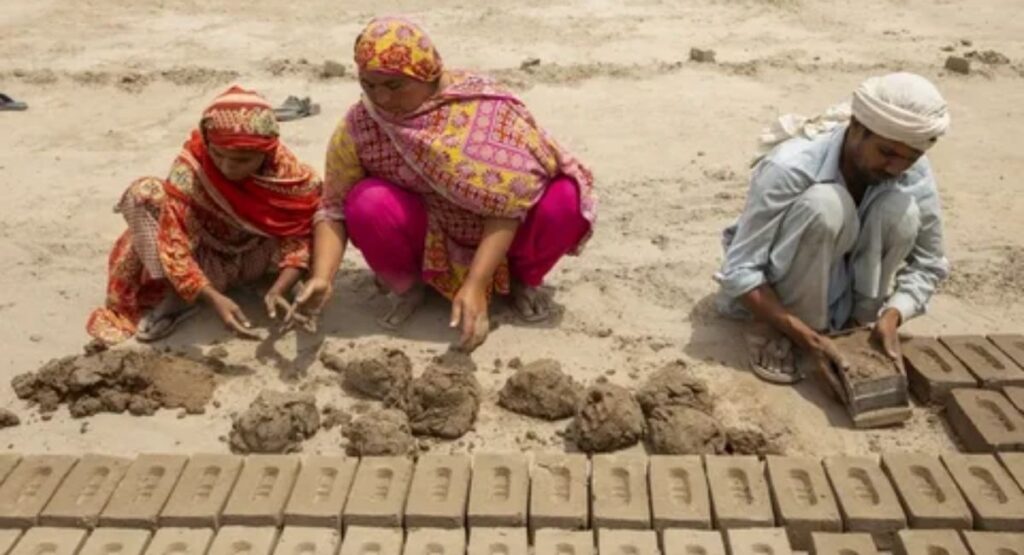
Across Pakistan, thousands of families begin their working day before sunrise. Moreover, as they walk toward towering stacks of bricks, surrounded by smoke, dust, heat, and heavy clay. As a result, parents work long hours, and generations can be trapped in a cycle of poverty and debt.
However, from a distance, a brick kiln can appear to merely produce bricks. But behind many kiln walls is a much deeper human story: a story of families struggling to repay debts, children losing education opportunities, and workers seeking freedom, dignity, and a better future.
Brick kiln bonded labor is not simply a poverty issue. It is a human dignity issue.
Moses Welfare Foundation works to bring attention to these communities and support vulnerable families through education, food assistance, healthcare, protection, skills development, and pathways toward a more secure future.
What Is Brick Kiln Bonded Labor?
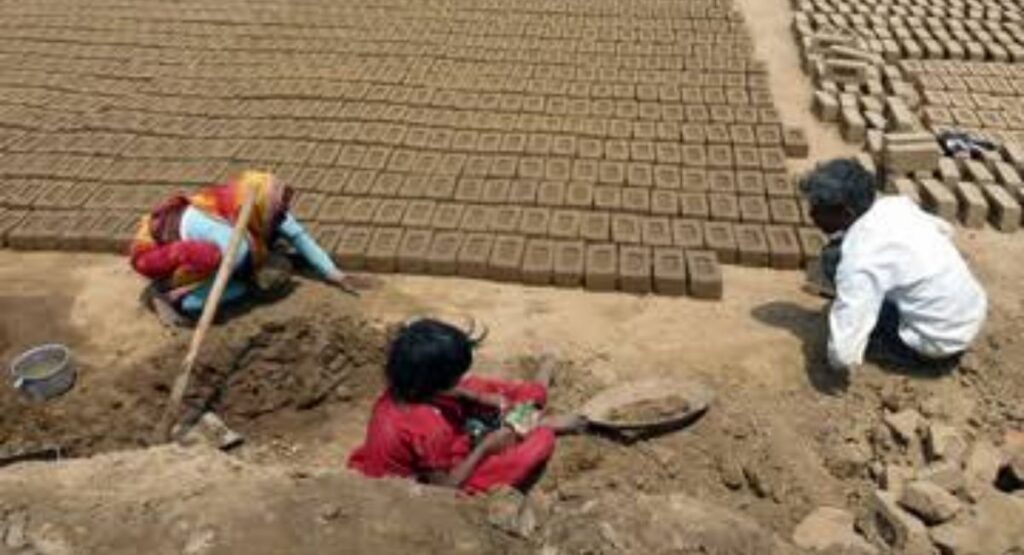
Bonded labor occurs when a person or family becomes economically trapped because of a debt or advance payment and must continue working to repay it.
In brick kiln communities, families may receive an advance from a kiln owner or contractor during a period of financial crisis. Additionally, the money may be used for food, medical expenses, housing, marriage, emergencies, or other essential needs.
But when wages are low, expenses continue, records may be unclear, and deductions accumulate, repayment can become extremely difficult.
The result can be a cycle like this:
Poverty → Debt → Advance Payment → Labor → Insufficient Income → Continuing Debt → Generational Poverty
For families caught in this cycle, leaving the kiln may not feel like a realistic option.
A History of Brick Kiln Labor in Pakistan
Brickmaking has a long history in South Asia. Bricks have been used for centuries to build homes, roads, schools, religious buildings, markets, and cities.
As Pakistan developed, brick kilns became an important part of the construction economy. Rapid urbanization, population growth, housing demand, and infrastructure development increased the need for affordable bricks.
However, alongside this economic importance, serious labor challenges developed in some brick kiln communities.
Poor families with limited access to formal employment, education, credit, healthcare, and social protection became particularly vulnerable to debt-based labor arrangements.
Over time, what may have started as a temporary financial arrangement could become a long-term cycle.
Parents who had limited opportunities could remain at the kiln for years. Their children could grow up working beside them rather than attending school. Without education or alternative skills, the next generation could face many of the same economic pressures.
This is how poverty can pass from one generation to another.
The Human Cost Behind Every Brick
A brick is small.
But behind thousands of bricks can be thousands of hours of human labor.
Picture a mother shaping bricks while caring for her young children. Imagine a father carrying heavy loads under the summer sun. Imagine a child watching classmates walk to school while he or she remains at the kiln.
These are not merely statistics.
They are families with dreams.
They want safe homes.
They want their children to study.
They want access to healthcare.
They want stable income.
And above all, they want dignity and freedom.
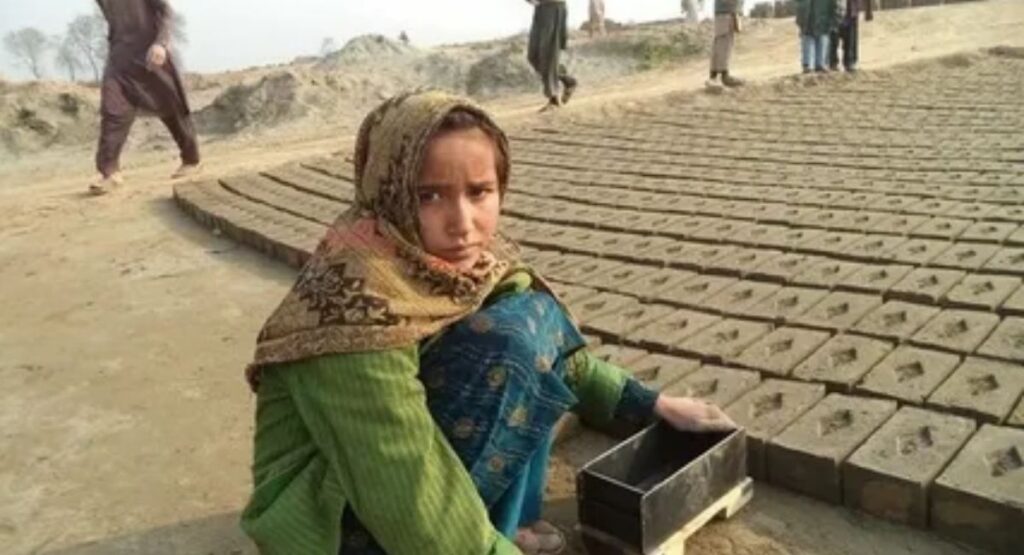
A Story of a Child Who Wanted to Go to School
Consider the story of “Ayesha,” a representative name used to protect a child’s identity.
Ayesha grew up in a brick kiln community in Punjab.
Every morning, she watched other children in her area prepare for school. They carried schoolbags, wore uniforms, and talked about their teachers and lessons.
Ayesha wanted the same life.
But her family was struggling financially.
Her parents worked at a brick kiln, and the family depended on their daily labor. There was little money available for school fees, books, uniforms, transportation, or other educational expenses.
Instead of spending her mornings in a classroom, Ayesha spent them near the kiln.
She learned how to recognize different types of work before she had the opportunity to learn how to read and write.
One day, an education outreach team visited the community.
They spoke with families and encouraged parents to consider education for their children. Ayesha was given an opportunity to join learning activities and receive educational support.
At first, she was shy.
Then she began attending regularly.
She learned letters.
Then words.
Then sentences.
Her confidence slowly changed.
The child who once watched other children going to school began to imagine herself becoming something more.
Perhaps a teacher.
Perhaps a nurse.
Perhaps something no one in her family had ever imagined.
Her story represents something larger than one child.
Education can be the first brick in the road from poverty to freedom.
Children Are Among the Most Vulnerable
Children living in brick kiln communities can face multiple barriers at the same time.
They may experience:
- Limited access to quality education
- Child labor
- Poverty and food insecurity
- Poor living conditions
- Limited healthcare
- Unsafe working environments
- Lack of documentation or access to services
- Social exclusion
- Limited opportunities for future employment
When a child is forced to work instead of attending school, the damage can extend far beyond childhood.
The child may lose foundational education.
Without education, future employment opportunities can become limited.
Limited employment can lead to poverty.
Poverty can lead to debt.
And debt can contribute to another generation becoming trapped in the same cycle.
Breaking this cycle requires more than telling children to leave work. It requires giving families realistic alternatives.
Why Families Become Trapped
It is easy to look at bonded labor from the outside and ask:
“Why don’t they simply leave?”
The reality is much more complicated.
Many families face extreme economic vulnerability.
A medical emergency can create debt.
A failed harvest can create debt.
Food insecurity can create debt.
Unemployment can create debt.
A family may have no savings and no access to affordable formal credit.
When an emergency occurs, borrowing money may seem like the only available solution.
For a poor family, a small amount of money can mean food for several weeks or medical treatment for a sick child.
But if the debt becomes connected to employment, the family can lose the ability to freely choose where and how they work.
That is why addressing bonded labor requires addressing the underlying causes of vulnerability.
The Cycle of Generational Poverty
The most painful part of the crisis is that poverty can become inherited—not because poverty is inevitable, but because opportunities are unequal.
A simplified cycle can look like this:
Generation One
Parents have little education and limited employment opportunities.
Financial Crisis
The family borrows money to survive an emergency.
Bonded Work
The family becomes dependent on kiln employment to repay the debt.
Children Grow Up at the Kiln
Children have limited access to education.
Limited Future Opportunities
Without education or skills, children have fewer options for decent employment.
The Cycle Continues
As adults, they may face the same poverty and debt pressures.
Our goal must be to break this cycle, not simply manage it.
Education: The Doorway to Freedom
Education is one of the strongest tools for breaking long-term poverty.
For children in brick kiln communities, education can mean much more than learning mathematics or reading.
It can mean:
Confidence.
Protection.
Opportunity.
Choice.
A future beyond the kiln.
That is why education programs should be designed around the realities of these communities.
Families may need educational materials, school supplies, transportation support, awareness sessions, nutrition assistance, and continued engagement with parents.
A child cannot easily focus on school while experiencing severe hunger or when the family depends entirely on the child’s labor.
Education must therefore be connected with family support.
Food Assistance: Supporting the Whole Family
Hunger can force families into desperate decisions.
When a family does not know where tomorrow’s meal will come from, long-term goals such as education can become difficult to prioritize.
Providing food assistance can help vulnerable households meet immediate needs while creating space for longer-term solutions.
A food package may appear simple.
But for a struggling family, it can mean:
One less day of hunger.
One less impossible choice.
One more reason to keep a child in school.
Healthcare and Human Dignity
Brick kiln communities can face difficult living and working conditions.
Access to healthcare may be limited, especially for families who cannot afford medical expenses or transportation.
A simple illness can become a serious financial burden.
Free or affordable medical camps, health awareness, medicines, maternal health support, and referrals can help vulnerable families protect their health without falling deeper into financial hardship.
Healthcare is not a luxury.
It is part of human dignity.
Women’s Empowerment: Creating Alternatives
Women in vulnerable communities often carry enormous responsibilities while having limited access to income-generating opportunities.
Vocational training, financial literacy, entrepreneurship support, and market-oriented skills can help women develop alternative sources of income.
When a mother has an opportunity to earn safely and sustainably, the benefits can extend across the household.
Income can support:
- Children’s education
- Food security
- Healthcare
- Household expenses
- Savings
- Emergency needs
Empowering women is therefore not only an economic strategy.
It is an investment in the future of the entire family.
The Role of Moses Welfare Foundation
Moses Welfare Foundation believes that vulnerable communities should not be defined by poverty.
They should be recognized for their dignity, potential, resilience, and dreams.
Our approach focuses on practical support that addresses immediate needs while helping families move toward long-term stability.
Our work with vulnerable communities includes areas such as:
Education
Helping children access learning opportunities, educational materials, and support that can keep them connected to school.
Food Assistance
Providing essential food support to families experiencing poverty and food insecurity.
Healthcare
Supporting vulnerable people through medical assistance, health awareness, and community-based services.
Child Protection
Promoting safer environments where children are protected from exploitation and have opportunities to learn and grow.
Skills and Livelihoods
Supporting families and women with skills and opportunities that can strengthen household income.
Community Awareness
Working with families and communities to promote education, dignity, child protection, and awareness of available opportunities.
From Bricks to Books
There is a powerful transformation we want to see.
A child who once carried bricks should have the opportunity to carry a book.
A girl who once believed her future was already decided should have the opportunity to dream.
A mother who has known only financial hardship should have the opportunity to build a stable livelihood.
A father who has spent years struggling with debt should have the opportunity to provide for his family through dignified work.
This is what development should mean.
Not simply giving someone something for today, but helping create opportunities for tomorrow.
What Can Donors Do?
The crisis is enormous, but every meaningful change begins with action.
Donors can support programs that help vulnerable families through:
- School supplies for children
- Educational support
- Food assistance
- Medical camps and medicines
- Child protection activities
- Women’s vocational training
- Livelihood and entrepreneurship support
- Community awareness
- Emergency assistance
A donation does not have to be large to matter.
$10 can contribute to essential support.
$25 can help provide educational or household assistance.
$50 can contribute toward healthcare, food, or children’s education.
$100 can help strengthen a family’s access to multiple forms of support.

The exact impact of every donation depends on program needs and local costs, but together, small contributions can create meaningful change.
Every Family Deserves a Future
Brick kiln workers are not simply laborers.
They are mothers and fathers.
They are sons and daughters.
They are children with dreams.
They are families who deserve safety, dignity, education, healthcare, and the freedom to build their own future.
The bricks they make may become homes for others.
But they also deserve a home filled with hope.
Breaking the Cycle Together
Ending bonded labor cannot happen through one organization alone.
It requires communities, government institutions, civil society organizations, responsible businesses, donors, educators, and ordinary people working together.
The solution must address both the immediate needs and the root causes.
We must help children access education.
We must strengthen family livelihoods.
We must improve access to healthcare.
We must protect children from exploitation.
We must raise awareness.
And we must create pathways toward sustainable independence.
When we invest in a child, we invest in a family.
When we strengthen a family, we strengthen a community.
When we strengthen a community, we help break the cycle of poverty.
Your Support Can Help Build a Different Future
Imagine a future where a child living beside a brick kiln has a schoolbag instead of a burden of bricks.
Imagine a mother gaining a skill that allows her to earn with dignity.
Imagine a family receiving healthcare without having to choose between medicine and food.
Imagine children growing up believing that their future is not determined by the place where they were born.
That future is possible, but it requires people who are willing to care and act.
Your support can help turn compassion into opportunity.
Help Us Build Hope, One Family at a Time
Moses Welfare Foundation is committed to standing alongside vulnerable communities in Pakistan and supporting practical pathways toward dignity, education, protection, and opportunity.
Together, we can help break the cycle.
Together, we can give children a chance to learn.
Together, we can help families build sustainable futures.
Donate Today. Help Turn Bricks into Books, Debt into Opportunity, and Hope into a Future.
Moses Welfare Foundation
Serving vulnerable communities. Protecting dignity. Building hope.