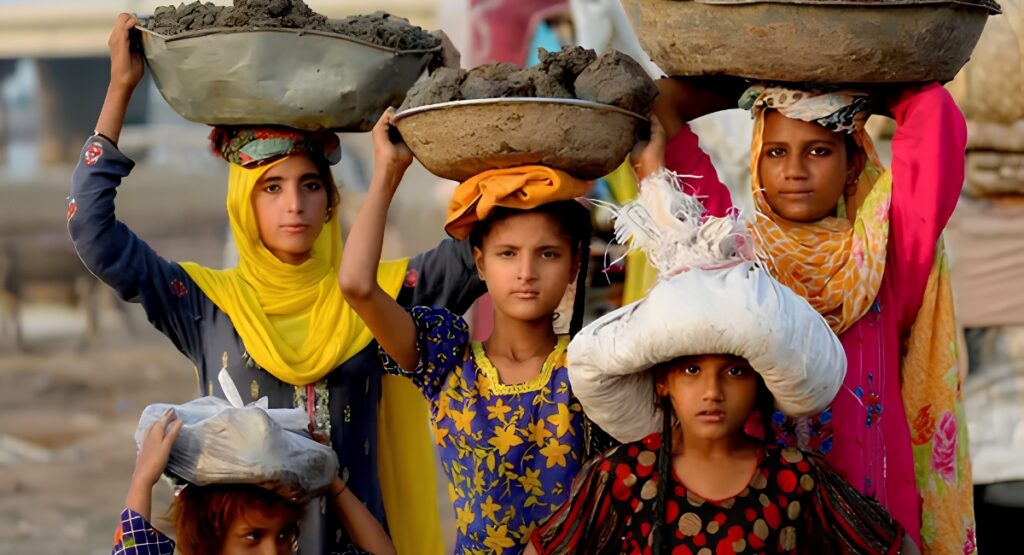
Every child deserves a childhood filled with safety, education, dignity, hope, and opportunity.
Yet for millions of children in Pakistan, poverty and limited opportunities can make that basic promise difficult to achieve. Instead of spending their days learning, playing, and preparing for their future, many children are engaged in work to help their families survive.
Child labour is not simply a matter of children working. It is closely connected to poverty, limited access to education, family vulnerability, informal employment, inadequate social protection, and economic insecurity.
The scale of the challenge is significant. According to information highlighted by the International Labour Organization (ILO) in June 2026, an estimated 8.6 million children aged 5–17 are engaged in child labour in Pakistan. A national report released by the National Commission for Human Rights (NCHR) in collaboration with UNICEF further found that more than 6.6 million children are involved in hazardous work that can threaten their health, safety, and development. (United Nations Pakistan)
At the same time, UNICEF estimates that approximately 25.1 million children aged 5–16 are out of school, representing about 35% of children in that age group. (UNICEF)
Behind these numbers are individual children with dreams, abilities, and futures that should not be determined by poverty.
At Moses Welfare Foundation, we believe education and child protection are essential pathways toward breaking cycles of poverty and creating safer opportunities for vulnerable children.
The Scale of Child Labour in Pakistan
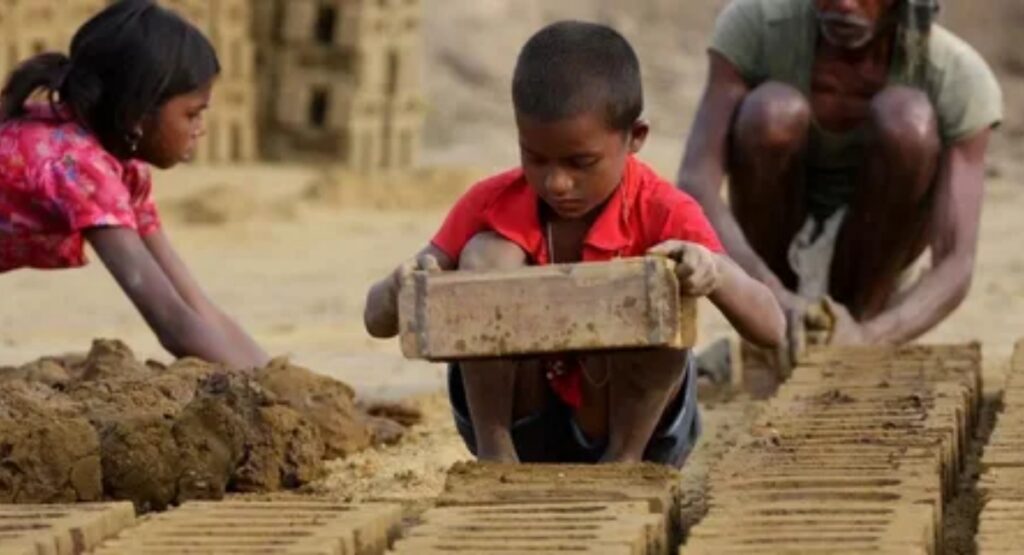
Pakistan’s child labour challenge is substantial and affects children across different communities and economic sectors.
The ILO reported in June 2026 that an estimated 8.6 million children aged 5–17 are engaged in child labour in Pakistan. Recent evidence also indicates that around 88% of child labour is concentrated in rural areas, highlighting the particular vulnerability of children living in underserved communities. (United Nations Pakistan)
The national child-labour evidence released by NCHR and UNICEF provides further detail, estimating that more than 6.6 million children are engaged in hazardous work. The report represents a major improvement in Pakistan’s evidence base, providing nationally representative information on the scale, distribution, sectors, risks and drivers of child labour. (UNICEF)
These figures are not simply statistics.
They represent children whose education may be interrupted, whose health may be exposed to risk and whose opportunities for the future may be reduced.
What Is Child Labour?
Not every form of work performed by a child is automatically classified as child labour.
International standards distinguish between permitted age-appropriate activities and work that is harmful, hazardous, excessive, or interferes with a child’s education and development.
The ILO explains that child labour includes work that children are too young to perform or work that, because of its nature or circumstances, can harm their health, safety, or morals. It can also interfere with a child’s right to education and healthy development. (International Labour Organization)
The most serious forms of child labour can expose children to dangerous environments, exploitation, abuse, and long-term physical or psychological harm.
Why Does Child Labour Happen?
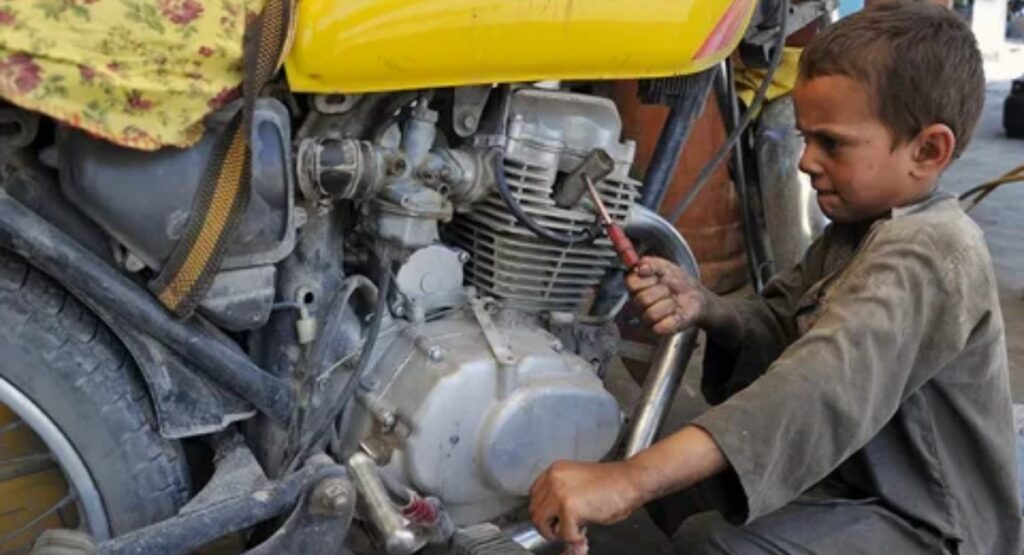
Child labour rarely has one single cause.
For vulnerable families, several pressures may exist at the same time.
Poverty
When parents struggle to provide food, housing, healthcare, and other necessities, children may be expected to contribute to household income.
Limited Access to Education
When schools are too far away, education-related costs are difficult to afford, or children lack the support they need, regular school attendance can become difficult.
Economic Insecurity
Families dependent on unstable or informal employment may have unpredictable incomes and few financial reserves.
Lack of Decent Work for Adults
When parents cannot find stable and adequately paid employment, household financial pressure can increase.
Family Vulnerability
Illness, disability, displacement, debt or the loss of a household income earner can make children more vulnerable to entering work.
Emergencies and Disasters
Floods, extreme weather and other emergencies can push already vulnerable families deeper into poverty and disrupt children’s education.
The ILO has emphasized that eliminating child labour requires more than enforcement. It also requires access to quality education, decent work for adults, social protection, and action addressing the underlying causes of poverty and vulnerability. (International Labour Organization)
Children in Brick Kiln Communities
Brick kiln communities are among the vulnerable environments where children can face significant barriers to education and protection.
Families may depend on physically demanding work and low or unstable incomes. Children living in these communities may face pressure to help their parents earn income or perform work connected to household survival.
Challenges can include:
- Poverty
- Limited access to nearby schools
- Education-related costs
- Transportation barriers
- Family financial pressure
- Limited awareness of available educational opportunities
- Economic dependence on informal work
When children spend their formative years working instead of learning, the consequences can continue into adulthood.
A child who misses school today may have fewer opportunities tomorrow.
The Link Between Child Labour and Poverty
One of the most difficult aspects of child labour is that it can reinforce a cycle that continues across generations.
The cycle can look like this:
Poverty → Child Labour → Lost Education → Limited Skills → Low-Paid Work → Continued Poverty
A child may work because a family needs additional income.
But without sufficient education and skills, that child may later have fewer opportunities for decent employment.
As an adult, they may continue to earn a low income.
Their own children may then face similar economic pressures.
Breaking this cycle requires more than simply telling children to stop working.
Families need practical alternatives.
Pakistan’s Education Challenge
Child labour and education are deeply connected.
A child who is working may have less time and energy for school. A child who is out of school may also be more vulnerable to entering the workforce.
Pakistan already faces a major education challenge.
UNICEF estimates that 25.1 million children aged 5–16 are out of school, representing around 35% of the country’s children in that age group. UNICEF also identifies Pakistan as having the world’s second-highest number of out-of-school children. (UNICEF)
The scale of educational exclusion shows why child labour cannot be addressed separately from education.
If children are to move away from harmful work, they need realistic access to safe and quality learning opportunities.
Why Education Matters
Education gives children knowledge, skills, and confidence.
But its importance goes far beyond academic learning.
Education can help children develop:
- Literacy
- Numeracy
- Communication skills
- Problem-solving abilities
- Social skills
- Confidence
- Awareness of rights
- Future employment opportunities
Most importantly, education gives children the opportunity to imagine a future beyond the circumstances into which they were born.
A classroom can become the beginning of a completely different life.
When Poverty Keeps Children Out of School
For a low-income family, education may involve costs that appear small to others but are significant for the household.
These may include:
- School uniforms
- Books
- Stationery
- Transportation
- Learning materials
- Examination-related expenses
There can also be indirect costs.
If a child attends school instead of working, the family may lose a small but important source of income.
That is why helping children attend school often requires supporting the family and the child together.
The Hidden Cost of Child Labour
The consequences of child labour can extend far beyond missed school days.
Physical Risks
Children working in hazardous environments may face injuries, exhaustion, and other health risks.
The 2026 national evidence is particularly concerning because more than 6.6 million children in Pakistan were identified as being engaged in hazardous work. (UNICEF)
Educational Loss
Long working hours can make regular school attendance difficult and may contribute to children leaving education altogether.
Emotional and Developmental Impact
Children carrying adult responsibilities too early may lose important opportunities for healthy childhood development.
Social Isolation
Working children may have fewer opportunities to participate in school and community activities with their peers.
Future Economic Consequences
Limited education and skills can reduce future opportunities for decent and stable employment.
Child labour therefore has both an immediate cost and a long-term cost.
Child Labour and Child Protection
Protecting children from harmful labour is part of a broader child-protection responsibility.
Children need:
- Safe environments
- Education
- Protection from exploitation
- Access to healthcare
- Family support
- Opportunities to participate in their communities
- Respect for their dignity and rights
A strong child-protection approach should address the circumstances that make children vulnerable rather than focusing only on the visible problem.
The Role of Families
Families should not simply be blamed for child labour.
Many parents are making extremely difficult decisions under economic pressure.
A mother or father may understand the importance of education but still feel unable to afford the loss of a child’s income.
This is why effective solutions should support rather than stigmatize vulnerable families.
Families need:
Income opportunities + Social protection + Education + Community support
When parents have better opportunities to earn a stable income, children have a greater chance of remaining in school.
The Role of Schools and Communities
Schools can become safe spaces where children learn, grow, and build confidence.
But schools cannot solve child labour alone.
Communities also have an important role.
Community-based approaches can help identify children who are out of school, understand why they are not attending, and connect families with available support.
Teachers, parents, community leaders, civil society organizations, and local institutions can work together to create pathways back to education.
Moses Welfare Foundation’s Commitment to Vulnerable Children
Moses Welfare Foundation works with vulnerable communities in Pakistan, including communities facing poverty and barriers to education.
Our commitment is rooted in the belief that every child deserves the opportunity to learn, grow, and build a better future.
Our community-focused work includes areas such as:
- Education
- Child-focused support
- Food assistance
- Community development
- Healthcare support
- Clean water
- Women and family empowerment
- Humanitarian assistance
For children living in vulnerable communities, educational support can help address some of the practical barriers that prevent children from remaining connected to learning.
Supporting Children in Vulnerable Communities
Moses Welfare Foundation recognizes that children cannot be protected through education alone.
A child may need a school uniform.
Another may need books.
Another may need food support because their family is struggling.
Another may need protection from harmful work.
Another may need a safe learning environment close to their community.
This is why our approach connects education, humanitarian assistance, family support, and community development wherever possible.
Education Is More Than a School Building
When we talk about education, we should think beyond classrooms.
A child needs:
A safe place to learn.
A teacher who cares.
Learning materials.
A family able to support attendance.
Protection from harmful work.
Food and basic wellbeing.
Hope for the future.
Education becomes truly powerful when these needs are considered together.
What Can Be Done?
Ending child labour requires action at multiple levels.
1. Keep Children in School
Reducing barriers to school attendance is one of the most important steps.
2. Support Vulnerable Families
Economic and humanitarian support can reduce pressure that pushes children toward harmful work.
3. Strengthen Child Protection
Communities need effective mechanisms for identifying and responding to children at risk.
4. Create Livelihood Opportunities for Adults
Parents need opportunities to earn enough to support their families without relying on children’s income.
5. Expand Social Protection
Families facing poverty need systems that can help them cope with economic shocks without turning to harmful coping strategies.
6. Raise Awareness
Parents, communities and employers need greater awareness of the long-term consequences of harmful child labour.
7. Support Quality Education
Children need accessible, safe and quality learning opportunities that allow them to remain in school.
8. Strengthen Partnerships
Government institutions, NGOs, communities, donors, businesses and international organizations all have roles to play.
The ILO’s 2026 Marrakech Global Framework for Action similarly emphasizes stronger implementation, education, social protection, decent work, and coordinated action to accelerate progress against child labour. (International Labour Organization)
How You Can Help a Child Stay in School
You do not have to solve the entire problem to make a difference.
You can start with one child, one family, or one community.
Your support can help provide:
- School supplies
- Books and learning materials
- Educational assistance
- Food support for vulnerable families
- Community outreach
- Child-protection activities
- Support for vulnerable children’s education
A small contribution can become part of a much larger opportunity.
One Child’s Education Can Change a Family’s Future
Imagine a child who once believed that working was the only possible future.
Now imagine that child entering a classroom.
Learning to read.
Writing their name.
Solving mathematics problems.
Making friends.
Building confidence.
Dreaming about becoming a teacher, doctor, engineer, entrepreneur, community leader, or another professional.
Education does not guarantee a particular future.
But it creates possibilities that poverty can otherwise take away.
From Child Labour to Opportunity
The goal is not simply to remove a child from work.
The goal is to create a safer and more hopeful alternative.
That alternative is built through:
Education + Protection + Family Support + Livelihood Opportunities + Community Action
When these elements come together, children have a better chance of escaping the cycle of poverty.
A Future Where Every Child Can Learn
Every child deserves the chance to discover their abilities.
Every child deserves time to learn.
Every child deserves protection from exploitation and dangerous work.
Every child deserves to dream.
Poverty should not decide a child’s future.
Where a child sees only a difficult present, we must help create a pathway toward a better tomorrow.
Conclusion
Child labour in Pakistan is not simply a labour problem.
It is connected to poverty, economic insecurity, family vulnerability, access to education, social protection and the availability of safe opportunities.
The latest national evidence shows the scale of the challenge: approximately 8.6 million children aged 5–17 are engaged in child labour in Pakistan, including more than 6.6 million in hazardous work. At the same time, around 25.1 million children aged 5–16 remain out of school. (United Nations Pakistan)
These numbers remind us that protecting children requires more than words.
We need to protect children.
We need to strengthen families.
We need to improve access to quality education.
We need to create opportunities for adults.
We need stronger social protection.
And we need communities, civil society, donors, businesses, and institutions to work together.
At Moses Welfare Foundation, we believe that every child deserves more than survival. Every child deserves the opportunity to learn, grow, and hope.
A child should be holding a schoolbook—not carrying the burden of poverty.
Stand With Vulnerable Children
Your support can help Moses Welfare Foundation provide educational and humanitarian assistance to vulnerable children and families in Pakistan.
Support Education. Protect Childhood. Build a Better Future.
Donate. Partner. Share. Help a Child Learn.