By Moses Welfare Foundation
Introduction
Access to safe water, adequate sanitation and essential hygiene services is fundamental to human health and dignity. For women and girls, however, these needs can become particularly important during menstruation, pregnancy, illness and other stages of life when privacy, clean water, safe sanitation facilities and appropriate hygiene materials are essential.
In many underserved and low-resource communities, women and girls may face several challenges at the same time: inadequate toilets, unreliable access to clean water, limited menstrual-health information, unaffordable hygiene products, insufficient privacy and social stigma surrounding menstruation.
These challenges are not simply matters of personal hygiene.
They are connected to health, education, dignity, gender equality, safety, participation and community development.
UNICEF explains that gender inequality, cultural taboos, poverty and inadequate access to basic services such as toilets and menstrual products can prevent girls and women from managing menstruation in a healthy and dignified way.
For communities facing poverty, the consequences can extend beyond individual health. A girl who is unable to manage her period safely at school may miss classes. A woman without access to a private toilet may face difficulties maintaining dignity and privacy. A family without reliable water may have to prioritize competing household needs.
Addressing women’s hygiene and sanitation therefore requires more than distributing hygiene products.
It requires an integrated approach that combines water, sanitation, hygiene education, menstrual-health information, privacy, affordability, community awareness, and protection.
Understanding Women’s Hygiene and Sanitation
Women’s hygiene and sanitation encompass the conditions and resources that allow women and girls to maintain health, cleanliness, privacy, and dignity.
This includes access to:
- Safe and sufficient water
- Clean and private toilets
- Handwashing facilities
- Soap and other hygiene materials
- Menstrual-health products
- Safe menstrual-waste disposal
- Accurate information about menstruation
- Appropriate health services
- Safe and private spaces
- Facilities that consider the needs of women and girls with disabilities
These elements are interconnected.
A menstrual-health programme, for example, cannot be fully effective if girls receive information and products but have no private place to change or dispose of used materials.
Likewise, building a toilet without ensuring water, privacy, maintenance and safe disposal may not adequately address women’s needs.
This is why modern WASH programming increasingly considers menstrual health and hygiene as part of inclusive water, sanitation and hygiene services.
A Brief History of Menstrual Health and Social Attitudes
Menstruation is a natural biological process that has existed throughout human history.
What has changed across societies and historical periods is not menstruation itself, but the way communities have understood, discussed, and managed it.
Across different cultures, menstruation has historically been associated with a wide range of beliefs, customs, and social practices. Some communities developed practical methods for managing menstrual bleeding, while others attached restrictions, taboos, or ideas of impurity to menstruation.
The historical challenge is therefore not simply a lack of products.
It is also the history of silence, limited information, and social attitudes surrounding women’s bodies.
In Pakistan, UNICEF research has documented a culture of silence around menstruation and reproductive health. Research conducted in Sindh found that girls often had significant information needs regarding puberty, menstruation, hygiene practices, and the physical and social changes associated with menarche.
This historical and social context matters because beliefs can influence whether girls feel comfortable asking questions, seeking information, purchasing menstrual products, or discussing health concerns.
The Pakistan Context
Pakistan has made efforts to increase awareness of menstrual health and improve WASH facilities, but important challenges remain.
UNICEF’s Pakistan work has documented gaps in menstrual-health knowledge and access to appropriate facilities.
In a 2017 U-Report poll involving 710 respondents, 49% reported not knowing about menstruation before their first period, while 44% reported lacking access to basic menstrual-hygiene facilities at home, school or work. The poll also found that 28% of respondents reported missing school or work during their periods.
These figures should be understood correctly.
They come from a UNICEF U-Report poll, not a nationally representative survey of every woman or girl in Pakistan. They nevertheless provide valuable insight into the experiences and concerns reported by participating girls and women.
The findings highlight why menstrual-health education, access to facilities, and open communication remain important areas for community development.
Menstruation Should Not Be a Source of Shame
One of the greatest barriers to menstrual health can be silence.
When girls are afraid to ask questions, they may rely on incomplete information from peers, social media, or traditional beliefs.
UNICEF’s Pakistan research found that girls’ knowledge about menstruation was often incomplete and that mothers and teachers were frequently important sources of information. However, the subject was not always discussed before menstruation began.
A girl should not have to experience her first period with fear or confusion.
She should have access to age-appropriate information before menstruation begins.
She should know that menstruation is a normal biological process.
She should know how to maintain hygiene safely.
And she should feel able to ask a trusted adult or qualified health professional questions about symptoms or concerns.
Water Is Essential to Women’s Hygiene
Safe water is one of the foundations of hygiene.
Women and girls require water for:
- Personal hygiene
- Handwashing
- Washing reusable menstrual materials where appropriate
- Cleaning toilets and sanitation spaces
- Bathing
- Household needs
- Caring for children and family members
Where water is scarce or difficult to collect, women and girls can carry a disproportionate burden because household water collection and care responsibilities often fall heavily on them.
UNICEF notes that inadequate access to hygiene facilities can create particular burdens for women and girls, while lack of water and soap can make everyday hygiene difficult.
Therefore, improving water access can support women’s health while also reducing time and practical burdens associated with household hygiene.
Sanitation Is About More Than Having a Toilet
A sanitation facility is not truly adequate simply because a toilet exists.
For women and girls, a usable sanitation facility should consider:
- Privacy
- Safety
- Cleanliness
- Water availability
- Handwashing
- Lighting where appropriate
- Safe menstrual-waste management
- Accessibility for people with disabilities
- Regular maintenance
For adolescent girls, these considerations become particularly important during menstruation.
UNICEF’s research in Sindh identified inadequate WASH facilities in schools as an important challenge for menstruating girls and documented the need for girl-friendly facilities.
A clean, private, and functional sanitation facility can therefore support both health and participation.
Menstrual Health Is a Development Issue
Menstrual health should not be treated as a narrow hygiene issue.
It intersects with several development priorities.
Health
Girls need accurate information and appropriate hygiene practices.
Education
Schools need facilities that allow girls to manage menstruation safely and privately.
Gender Equality
Girls should not experience exclusion or discrimination because of a normal biological process.
Economic Participation
Women should be able to participate in work and community life without unnecessary barriers.
Dignity
Every woman and girl should be able to manage menstruation privately and respectfully.
Social Inclusion
Women and girls should be able to ask questions and access information without shame.
This makes menstrual health relevant to WASH, education, health, gender equality and child protection programmes.
The Connection Between Menstrual Health and Education
Education is one of the areas where menstrual-health barriers can become particularly visible.
A girl may miss school because:
- She lacks menstrual products.
- The school has no private toilet.
- There is no water available.
- Disposal facilities are inadequate.
- She fears staining her clothes.
- She feels embarrassed.
- She experiences menstrual pain without appropriate support.
- Teachers or classmates may not respond sensitively.
UNICEF’s Pakistan U-Report findings documented school and workplace absenteeism among respondents and highlighted the role of inadequate facilities and stigma.
Improving menstrual-health management should therefore be considered part of creating a more supportive educational environment for adolescent girls.
Poverty and Menstrual Hygiene
For families living with limited income, hygiene products can become another household expense.
A family may need to prioritize:
- Food
- Rent
- Electricity
- Medicine
- School expenses
- Transportation
- Clothing
Menstrual products may therefore become difficult to purchase consistently.
This is particularly concerning when girls or women have no suitable alternative that is safe, hygienic, and appropriate for their circumstances.
UNICEF identifies poverty as one of the factors that can contribute to unmet menstrual-health needs.
The solution should not be limited to product distribution.
Long-term approaches can include:
Affordable products + accurate information + WASH facilities + community education + referral to healthcare + protection from stigma.
The Role of Schools
Schools can play a major role in improving menstrual health among adolescent girls.
A supportive school environment should provide:
- Private and functional toilets
- Water
- Soap
- Appropriate menstrual-waste disposal
- Accurate age-appropriate information
- Supportive teachers
- Protection from bullying and harassment
- Inclusive facilities
UNICEF’s Pakistan programmes have included menstrual-hygiene awareness, school facilities, and menstrual-hygiene kits as part of efforts to improve girls’ ability to manage menstruation with dignity.
Teachers also require appropriate guidance.
They do not need to become healthcare professionals, but they should know how to respond respectfully and refer students to appropriate health resources when necessary.
Women and Girls with Disabilities
Women and girls with disabilities can face additional barriers.
A toilet may exist but still be inaccessible.
A water point may be too difficult to reach.
Instructions may not be available in accessible formats.
A girl may require assistance but feel uncomfortable asking for it.
UNICEF specifically recognizes that girls and women with disabilities can face additional challenges in managing menstruation because of the intersection of gender, disability, and social stigma.
Therefore, inclusive WASH programming should consider accessibility from the beginning rather than treating it as an optional addition.
The Importance of Accurate Information
Information is one of the most affordable interventions, but it must be accurate, culturally appropriate, and respectful.
Girls should have access to information about:
- What menstruation is
- When menstruation normally begins
- Basic hygiene
- Appropriate menstrual products
- Safe disposal
- Managing common discomfort
- When to seek medical advice
- Where to find trusted health information
Parents and caregivers can also benefit from education.
Boys and men should not be excluded from awareness efforts.
Creating healthier communities requires an environment in which menstruation can be discussed respectfully rather than treated as a subject of shame.
UNICEF Pakistan has used community engagement, youth participation, and communication campaigns to encourage more open and informed conversations about menstrual health.
Cultural Sensitivity Matters
Effective humanitarian programmes must respect the communities they serve.
Menstrual-health education should therefore be:
- Age-appropriate
- Culturally sensitive
- Respectful
- Evidence-based
- Inclusive
- Confidential where appropriate
- Delivered by appropriately trained personnel
The objective is not to criticize communities.
The objective is to ensure that women and girls have accurate information, safe facilities, and the ability to manage menstruation with dignity.
Community leaders, parents, teachers, health workers, and young people can all contribute to positive change.
From Awareness to Practical Action
Awareness alone is not enough.
A girl may understand menstrual hygiene but still lack water.
A woman may know how to manage menstruation but be unable to afford suitable products.
A school may distribute information but lack private sanitation facilities.
Therefore, effective programmes should connect knowledge with practical resources.
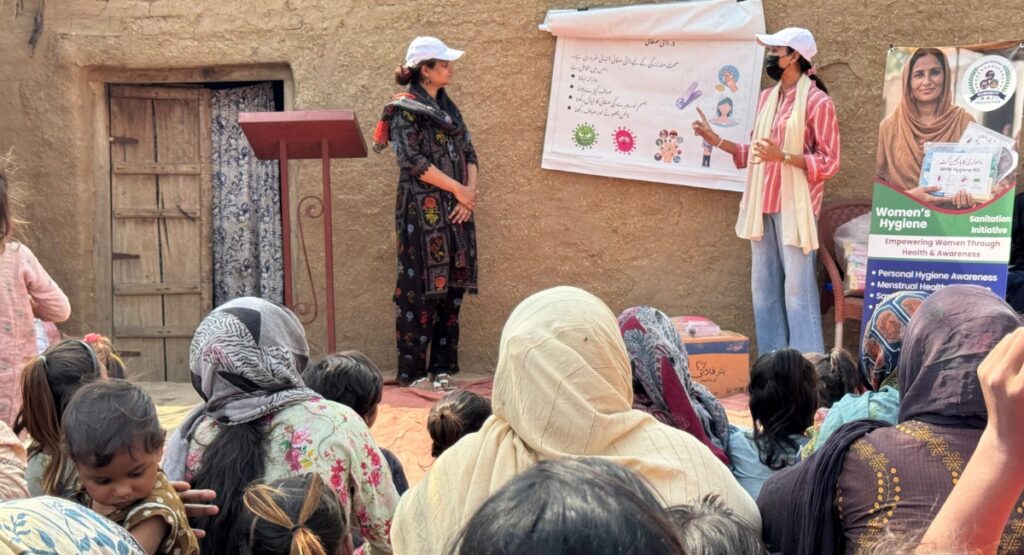
A community-based programme can include:
1. Hygiene Education
Age-appropriate sessions for girls, women, and caregivers.
2. Menstrual Hygiene Kits
Support for vulnerable women and girls who cannot consistently afford essential products.
3. Water Access
Improved access to safe and sufficient water.
4. Girl-Friendly Sanitation
Private, clean, and functional sanitation facilities.
5. Safe Disposal
Appropriate systems for menstrual waste management.
6. Community Awareness
Engagement with parents, teachers, community leaders, and men and boys.
7. Health Referral
Clear pathways for women and girls who require professional medical advice.
8. Inclusive Facilities
Sanitation and hygiene solutions that consider people with disabilities.
Women’s Hygiene and Community Development
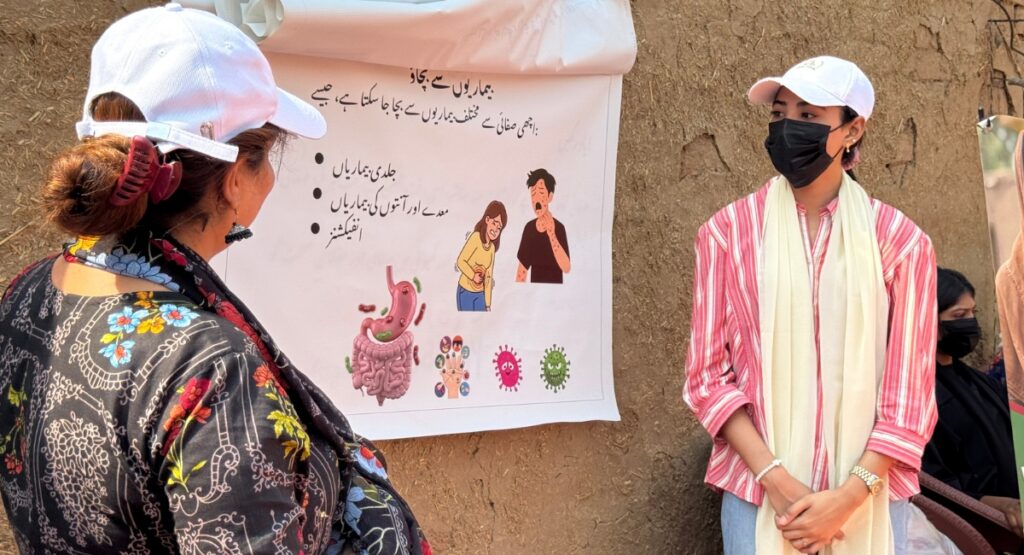
Investing in women’s hygiene can have wider community benefits.
When women and girls have better access to WASH services, they can experience fewer practical barriers to education, work, and community participation.
When girls are able to attend school consistently, their educational opportunities can improve.
When women have access to private sanitation facilities, their dignity and safety can be strengthened.
When communities understand menstrual health, harmful stigma can begin to decrease.
This demonstrates an important principle:
Women’s hygiene is not a separate issue from development. It is part of development.
Moses Welfare Foundation’s Community Perspective
Moses Welfare Foundation believes that community development should address practical needs while protecting dignity.
Women’s hygiene and sanitation can be incorporated into broader community development and humanitarian programming through activities such as:
- Hygiene-awareness sessions
- Menstrual-health education
- Women’s hygiene support
- Community WASH initiatives
- Hygiene kits for vulnerable households
- Girl-friendly sanitation awareness
- Clean-water initiatives
- Community outreach
- Referral and awareness regarding appropriate health services
The exact activities should be designed according to community needs, available resources, safeguarding standards, and programme assessments.
For MWF, the goal should not simply be to distribute products.
The goal is to contribute to communities where women and girls can access the knowledge, facilities, and resources necessary to live with health and dignity.
A Dignity-Centered Approach
Humanitarian assistance should never reduce people to statistics.
A woman receiving a hygiene kit is not simply a beneficiary.
She is a mother, daughter, sister, worker, student, caregiver, or community member.
A girl receiving menstrual-health information is not simply a programme participant.
She is a young person preparing for adulthood.
A clean sanitation facility is not simply infrastructure.
It can represent privacy, safety and dignity.
This is why humanitarian programmes should be designed around the people they serve.
What Donors and Partners Can Support
Organizations and donors interested in women’s health and WASH can support several complementary areas.
Women’s Hygiene Kits
Essential hygiene supplies for women and girls from vulnerable households.
Menstrual Health Education
Community-based information sessions delivered in safe and culturally appropriate settings.
Water and Sanitation
Improving access to safe water and appropriate sanitation facilities.
School WASH
Supporting girls to remain engaged in education by improving school hygiene facilities.
Community Awareness
Reducing stigma and encouraging accurate information.
Inclusive WASH
Designing facilities that can be used safely by people with disabilities.
Emergency Hygiene Support
Including women’s hygiene needs within humanitarian emergency responses.
A strong programme should combine these interventions wherever appropriate rather than treating them as isolated activities.
Measuring Impact Responsibly
Professional NGO programmes should measure more than the number of hygiene kits distributed.
Useful indicators may include:
- Number of women and girls reached with hygiene education
- Number of households receiving hygiene support
- Number of schools with improved girl-friendly WASH facilities
- Availability of water and soap
- Availability of menstrual-waste disposal options
- Knowledge improvement among programme participants
- School attendance or participation where appropriate
- Community awareness of menstrual health
- Inclusion of girls and women with disabilities
- Feedback and satisfaction from participants
Most importantly, organizations should establish safeguarding, feedback, and complaints mechanisms so that women and girls can safely express concerns about programmes.
Looking Ahead
The future of women’s hygiene and sanitation in Pakistan requires a shift from treating menstrual health as a private or taboo subject toward recognizing it as a legitimate component of public health, WASH, education and community development.
Progress requires cooperation between:
- Government institutions
- Schools
- Health professionals
- Local communities
- Civil society organizations
- Women’s groups
- Youth
- Humanitarian organizations
- Development partners
- Donors
No single organization can solve every challenge.
But every organization can contribute to creating better conditions.
Conclusion
Women’s hygiene and sanitation are fundamental to health, dignity, and opportunity.
For women and girls living in underserved communities, inadequate access to water, sanitation, hygiene materials,s and accurate information can create barriers that extend far beyond personal hygiene.
These barriers can affect education, health, confidence, mobility, safety and participation in community life.
Pakistan has already seen important initiatives to address menstrual health and WASH. UNICEF’s research and programmes have demonstrated both the challenges and the importance of community-based solutions.
The next step is to continue moving from silence to awareness, from inadequate facilities to inclusive WASH, and from short-term assistance to sustainable community solutions.
Every woman deserves access to safe and appropriate hygiene facilities.
Every girl deserves accurate information about her body.
Every school should provide an environment where girls can learn with dignity.
Every community deserves access to safe water and sanitation.
And every humanitarian response should recognize the specific needs of women and girls.
At Moses Welfare Foundation, we believe that meaningful community development begins by listening to people, understanding their needs, and supporting solutions that protect both well-being and dignity.
Support Women’s Health and Dignity
Together, we can help build healthier, safer, and more inclusive communities where women and girls have the knowledge, resources, and opportunities they need to thrive.
Health. Dignity. Inclusion. Opportunity.