By Moses Welfare Foundation
A woman does not need sympathy to change her life.
She needs an opportunity.
An opportunity to learn a skill.
An opportunity to earn with dignity.
An opportunity to make decisions about her future.
An opportunity to build a better life for her children.
Across Pakistan, women contribute every day to their families and communities through agriculture, home-based work, small businesses, caregiving, education, and countless forms of work that often remain invisible in economic statistics.
Yet opportunity is not equally available to everyone.
According to World Bank data using ILO estimates, Pakistan’s female labour-force participation was approximately 24% in 2025, compared with around 80% for men.
Behind that gap are real barriers: limited access to finance, restricted mobility, lack of market opportunities, unpaid work, limited digital access, social expectations, and insufficient access to relevant skills.
For women living in poverty, these barriers can be even greater.
At Moses Welfare Foundation, we believe that women’s empowerment should not end when a training course ends.
The real measure of empowerment is what becomes possible afterward.
Beyond Charity: Creating Opportunity
Traditional charity often asks:
“What does this family need today?”
Women’s economic empowerment asks another question:
“What opportunity can help this family become stronger tomorrow?”
Both questions matter.
Emergency assistance can protect a family during a crisis. But sustainable skills and income opportunities can help reduce long-term vulnerability.
That is why women’s empowerment should connect five important elements:
Skills
Practical knowledge that can be used in real life.
Tools
The equipment necessary to turn knowledge into productive work.
Confidence
The ability to make decisions and pursue opportunities.
Markets
Access to customers and buyers.
Income
A sustainable opportunity to contribute to household financial security.
Skills without opportunity can remain unused.
Opportunity without skills can remain inaccessible.
The goal is to connect both.
The Invisible Work of Pakistani Women
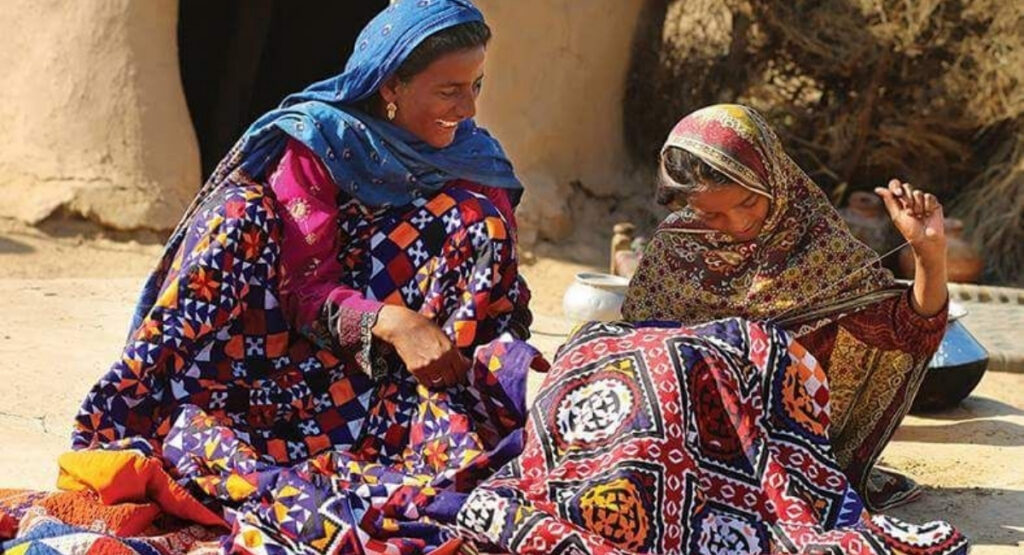
A woman may spend her day working in the fields, caring for children, preparing food, managing the household, and producing goods for sale.
Yet much of this work may never appear as a formal salary.
The World Bank’s research on women’s economic empowerment in Pakistan found that 68% of employed women in its analysis worked in agriculture, while 76% of women employed in agriculture had worked without pay during the previous week.
These numbers tell us something important:
Women are already contributing.
The challenge is to help more of that contribution become recognized, productive, and fairly rewarded economic activity.
From a Skill to a Livelihood
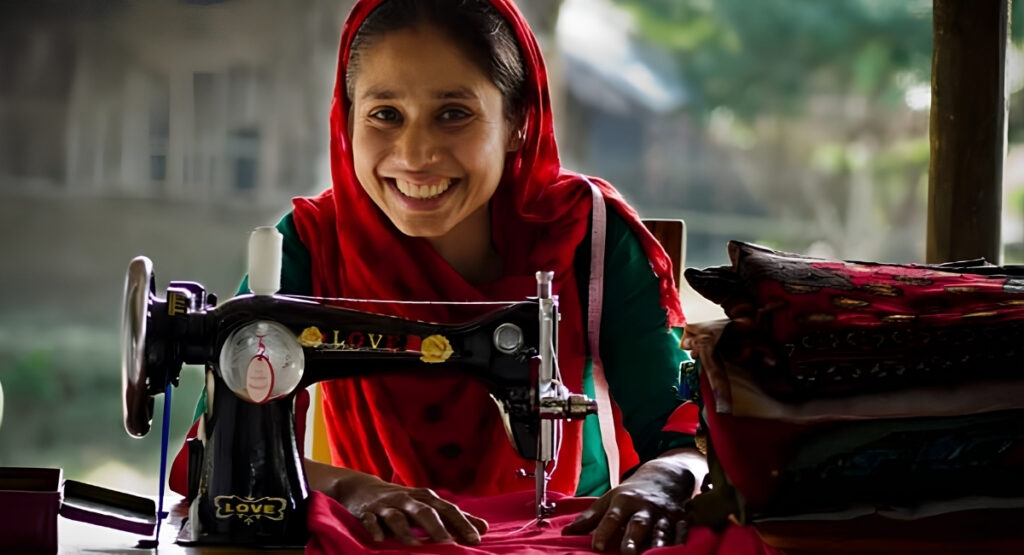
Consider a woman who learns tailoring.
At first, she gains a skill.
But the transformation does not happen simply because she completed training.
She may still need:
- A sewing machine
- Fabric and materials
- Business knowledge
- Pricing skills
- Customers
- Marketing
- Digital tools
- Financial literacy
- Mentorship
When these pieces come together, a skill can become a livelihood.
This is the difference between training someone and creating an opportunity.
At Moses Welfare Foundation, we believe programmes should focus on this complete journey.
Why Women’s Income Matters to the Whole Family
A woman’s income is rarely just about her.
It can strengthen the household.
Additional income may help families pay for:
- School fees and supplies
- Food
- Healthcare
- Transportation
- Clothing
- Household expenses
- Children’s needs
This is particularly important for families living close to or below the poverty line.
A small, reliable income can provide something that poverty often takes away:
choice.
The choice to buy medicine.
The choice to keep a child in school.
The choice to purchase nutritious food.
The choice to invest in a small business.
The choice to plan beyond tomorrow.
Empowerment and Children’s Futures
One of the strongest reasons to invest in women is the potential impact on the next generation.
When household economic security improves, families may have greater capacity to invest in children’s:
Education.
Nutrition.
Healthcare.
Safety.
This creates a powerful cycle:
Empower a Woman
↓
Strengthen Household Income
↓
Improve Family Resilience
↓
Support Children’s Education
↓
Create Better Opportunities for the Next Generation
Women’s empowerment is therefore not only a women’s issue.
It is a family issue.
It is an education issue.
It is a poverty-reduction issue.
It is a community-development issue.
The Home Can Become a Workplace
For many women, especially those living in conservative or rural communities, working outside the home may not always be practical.
Home-based entrepreneurship can therefore offer an important alternative.
The World Bank reports that, in its analysis of Pakistan, 81% of women’s entrepreneurship took place at home, compared with only 2% of men’s entrepreneurship.
Home-based enterprises can include:
- Tailoring
- Embroidery
- Handicrafts
- Food production
- Beauty services
- Clothing
- Online selling
- Freelancing
- Small-scale retail
But home-based does not have to mean small forever.
With access to markets, technology, finance, and business knowledge, a home-based activity can potentially develop into a sustainable enterprise.
The internet has changed what is possible for entrepreneurs.
A woman no longer necessarily needs a physical shop to reach customers.
With the right skills and access, she can use:
- E-commerce platforms
- Digital payments
- Online marketplaces
to promote and sell products or services.
Digital skills can also create opportunities in areas such as:
- Graphic design
- Digital marketing
- Content creation
- Online customer support
- Freelancing
- E-commerce management
The World Bank has highlighted digital-skills initiatives in Pakistan that have supported young people, including women, in accessing opportunities in the digital economy.
For women who face mobility restrictions, digital work can potentially bring the marketplace closer to home.
Finance: The Missing Bridge
A good idea needs resources.
A woman may know exactly what business she wants to start but lack the money to purchase the equipment or materials required.
She may need:
A sewing machine.
Raw materials.
A smartphone.
Business inventory.
Packaging.
Transportation.
Digital tools.
Access to appropriate financial services can therefore be an important part of women’s economic empowerment.
The World Bank has highlighted financial inclusion and access to finance as significant issues for Pakistani women entrepreneurs.
But finance must be accompanied by knowledge.
A woman needs to understand how to:
- Calculate costs
- Set prices
- Manage cash flow
- Record sales
- Save
- Manage business risks
Capital can start a business.
Knowledge can help sustain it.
Rural Women Deserve Economic Opportunity Too
In rural Pakistan, women’s economic contributions are often closely connected to agriculture and household production.
Women may care for livestock, work on farms, process food, produce handicrafts, or support family enterprises.
Yet distance from markets, limited transportation, lack of finance, and limited training can restrict opportunities.
A rural women’s empowerment programme therefore needs to start with the local reality.
Instead of asking:
“What training can we offer?”
we should ask:
“What skills and opportunities can realistically generate income in this community?”
That change in thinking can make development programmes more effective.
Training Should Follow the Market
Not every skill automatically leads to employment.
A professional programme should begin with understanding demand.
What products are people buying?
What services are needed?
What businesses are growing?
What skills can women realistically use from home?
What digital opportunities are available?
What local markets can they access?
This is why market-oriented vocational training is so important.
The objective should be:
Train → Equip → Connect → Earn → Grow
rather than simply:
Train → Certificate → End
What Meaningful Women’s Empowerment Looks Like
Real empowerment can be seen in small but powerful changes.
A woman who previously depended entirely on others begins earning her own income.
A mother is able to contribute toward her child’s school expenses.
A young woman learns digital skills and begins working online.
A rural entrepreneur finds customers outside her immediate village.
A group of women begins producing products together.
A trained woman teaches another woman what she has learned.
These moments may look small.
But development is often built from small changes repeated over time.
Moses Welfare Foundation: Investing in Women’s Potential
At Moses Welfare Foundation, we believe vulnerable women should not be defined by poverty.
They should be seen for their potential.
Our women’s empowerment approach focuses on creating pathways toward skills, livelihoods, and greater economic resilience.
Depending on community needs and available resources, programmes may include:
- Vocational skills training
- Tailoring and dressmaking
- Handicraft development
- Entrepreneurship training
- Financial literacy awareness
- Digital skills
- Small-business development
- Livelihood support
- Women’s community groups
- Market-oriented training
The purpose is not simply to provide a training certificate.
The purpose is to help create a possibility for a better future.
From Training Room to Marketplace
A successful programme should not end when the classroom closes.
The journey can continue:
01 — Discover
Understand the woman’s interests, existing skills, and circumstances.
02 — Train
Provide practical, market-relevant skills.
03 — Equip
Where appropriate, provide access to essential tools and materials.
04 — Build
Develop business, financial, and digital knowledge.
05 — Connect
Create pathways to customers and markets.
06 — Mentor
Guide as women begin using their skills.
07 — Grow
Support women who are ready to expand their livelihood activities.
This approach puts the woman, not the training session, at the centre of the programme.
Why Donor Support Matters
A donor may think:
“I am sponsoring one woman’s training.”
But the potential impact can go much further.
That training may lead to:
One new skill
→ One income opportunity
→ One stronger household
→ Better opportunities for children
→ A more resilient community
This is why investing in women’s economic empowerment can have a multiplier effect.
Your support can help create the conditions in which women build solutions for their own families.
Empowerment With Dignity
The language we use matters.
Women living in poverty are not simply “beneficiaries.”
They are mothers.
Entrepreneurs.
Workers.
Caregivers.
Farmers.
Teachers.
Creators.
Leaders.
They have skills, ideas, and ambitions.
Our role as a humanitarian organization is to help remove barriers and create opportunities not to take away people’s dignity.
The strongest form of support is support that helps people move forward.
A Woman’s Success Can Become a Family’s Hope
Imagine a woman receiving her first sewing machine after completing vocational training.
She begins with a few customers.
Then more people hear about her work.
She improves her designs.
She learns to promote her products online.
Her income grows.
She contributes to household expenses.
Her children see their mother building something of her own.
The sewing machine was only the beginning.
The real investment was in her potential.
What Your Support Can Help Provide
Your partnership can contribute toward programmes such as:
Skills Training
Practical vocational education for vulnerable women.
Training Materials
Supplies required to learn and practice new skills.
Business Development
Training in budgeting, pricing, marketing, and entrepreneurship.
Equipment
Tools that can help women begin income-generating activities.
Digital Skills
Knowledge that can connect women with modern economic opportunities.
Mentorship
Follow-up support after training.
Market Connections
Pathways toward customers and sustainable income.
The Future We Want to Build
We envision communities where women are not limited by poverty.
Where a woman can say:
“I have a skill.”
“I have an opportunity.”
“I can contribute.”
“I can support my family.”
“I can plan for tomorrow.”
That is more than economic progress.
That is dignity.
Conclusion: Invest in Potential, Not Dependence
Women’s empowerment in Pakistan requires more than short-term assistance.
It requires a long-term commitment to skills, economic opportunity, financial inclusion, market access and dignity.
The statistics show the scale of the challenge. Pakistan’s female labour-force participation remains dramatically below that of men, while many women continue to work in agriculture, home-based businesses and unpaid roles.
But statistics should not be the end of the conversation.
They should be the beginning.
Behind every percentage is a woman with a story.
A mother with a dream.
A young woman with a skill she wants to develop.
A small entrepreneur looking for her first customer.
A family hoping for a more secure future.
At Moses Welfare Foundation, we believe that the best investment is one that creates possibility.
Teach a skill.
Open a door.
Create an opportunity.
Strengthen a family.
Build a community.
EMPOWER A WOMAN. STRENGTHEN A FAMILY.
Your support can help create meaningful skills and livelihood opportunities for vulnerable women in Pakistan.
Support Women. Create Opportunity. Transform Futures.