By Moses Welfare Foundation
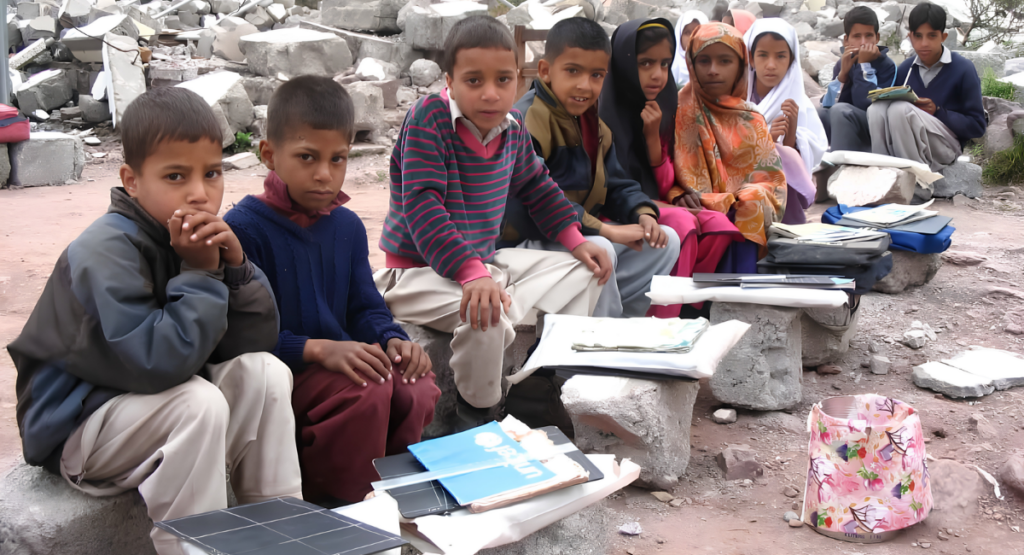
Every child deserves the opportunity to learn, regardless of where they were born or how much their family earns.
Education is one of the most important foundations of human development. It can expand economic opportunity, strengthen families, improve social participation, and help children develop the knowledge and skills they need for adulthood.
Yet for millions of children in Pakistan, access to education remains uncertain.
The challenge is not limited to whether a child enters a classroom. It also concerns whether children are able to remain in school, receive quality instruction, develop foundational skills, and progress toward further education or productive livelihoods.
Pakistan’s latest official Household Integrated Economic Survey (HIES) 2024–25 reports that the proportion of children aged 5–16 who are out of school has declined from 30% to 28% nationally. (Pakistan Bureau of Statistics)
At the same time, UNICEF currently estimates that approximately 25.1 million children aged 5–16 are out of school, representing about 35% of the population in that age group. UNICEF identifies Pakistan as having the world’s second-highest number of out-of-school children. (UNICEF)
These figures demonstrate both progress and the scale of the remaining challenge.
For Moses Welfare Foundation, education is not simply a development objective. It is an investment in children’s dignity, potential, and future opportunities.
Understanding Pakistan’s Education Challenge
National statistics provide an important overview, but they do not tell the whole story.
Children experience educational barriers differently depending on their location, gender, household income, disability, social circumstances, and exposure to emergencies.
The World Bank has emphasized that Pakistan’s large out-of-school population needs to be understood geographically and socially: knowing how many children are excluded is important, but understanding where they are and why they remain out of school is essential for designing effective responses. (World Bank Blogs)
This distinction matters for humanitarian and development organizations.
A programme that works in an urban community may not be suitable for a remote rural village.
A solution for a child who lacks school supplies may not address the situation of a child who is working to support the household.
And an intervention that increases enrollment may still be insufficient if children are not acquiring basic literacy and numeracy skills.
Effective education programming therefore requires a combination of access, retention, inclusion, quality, and learning.
Access to School Is Only the Beginning
Getting children into school is a critical first step.
But enrollment alone cannot guarantee educational success.
The World Bank’s recent analysis of Pakistan’s poverty and human-development situation reports that 78% of 10-year-olds are unable to read and understand a simple text, illustrating the country’s severe learning challenge. (World Bank)
This is commonly described as learning poverty.
It means that even when children are counted as participating in education, many may not be developing the foundational skills required to continue learning effectively.
A comprehensive education response therefore needs to ask two questions:
Are children attending school?
and
Are children learning?
Both questions matter.
Poverty and the Cost of Education
Poverty is one of the most significant barriers facing vulnerable children.
For families struggling to meet basic household needs, education-related expenses can become difficult to manage.
These may include:
- School uniforms
- Shoes
- Books
- Notebooks
- Stationery
- Transportation
- Examination costs
- Other school-related expenses
For a household with limited income, even relatively modest expenses can influence decisions about school attendance.
This does not mean that parents do not value education.
In many cases, it means families are forced to make difficult choices between competing necessities.
Supporting vulnerable children therefore requires sensitivity to the economic circumstances of their households.
Educational assistance can be one component of a broader approach that also considers food security, livelihoods, child protection and emergency assistance.
Child Labour and Interrupted Education
Child labour and educational exclusion can reinforce one another.
When children are required to work, they may have less time for school, homework and rest.
When children leave school, their future employment options may become more limited.
This can create a cycle:
Household Poverty
↓
Child Labour or Educational Exclusion
↓
Interrupted Learning
↓
Limited Skills
↓
Fewer Economic Opportunities
↓
Continued Vulnerability
Breaking this cycle requires more than encouraging children to attend school.
Families may also need livelihood support, social protection, educational assistance, and community-based protection mechanisms.
This is particularly relevant in communities where children are exposed to hazardous or exploitative work.
Children in Brick-Kiln Communities
Brick-kiln communities illustrate how poverty, labour, and education can intersect.
Families dependent on low-income labour may face economic pressures that affect children’s access to education.
Children living in such communities can face risks associated with poverty, limited educational access, and participation in work.
For these children, education can represent an important pathway toward greater choice and opportunity.
A child who develops literacy and numeracy skills has a stronger foundation for further learning.
A child who remains in education has more opportunities to acquire vocational or professional skills.
And a young person with stronger skills may have greater possibilities beyond the cycle of low-paid and hazardous labour.
For organizations working with vulnerable communities, education and child protection should therefore be approached together rather than as separate issues.
Girls’ Education Requires Particular Attention
Education must be accessible to both girls and boys.
However, girls can experience additional barriers.
These may include:
- Household responsibilities
- Poverty
- Safety concerns
- Distance to school
- Social expectations
- Early marriage
- Limited access to suitable sanitation facilities
- Restrictions on mobility
The World Bank identifies additional barriers affecting girls, particularly in rural areas, and notes the relationship between educational outcomes, early marriage, fertility, and economic dependence. (World Bank)
Investing in girls’ education therefore has implications beyond the classroom.
It can contribute to greater opportunities for future employment, participation in household decisions, and economic independence.
It can also influence the opportunities available to the next generation.
Rural and Marginalized Communities
Geography can determine opportunity.
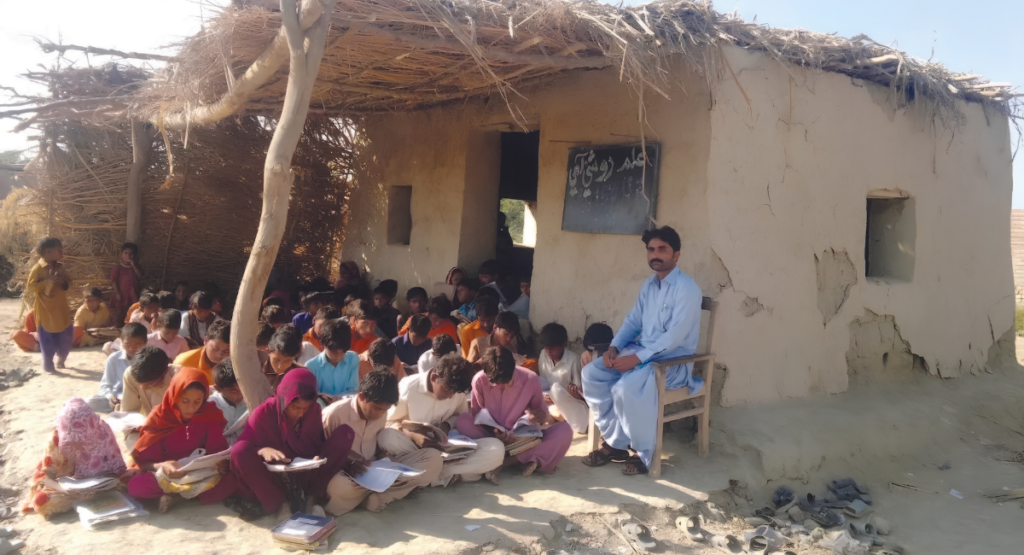
For children living in remote communities, reaching a school may require significant travel.
Other challenges may include:
- Limited transportation
- Teacher shortages
- Inadequate facilities
- Overcrowded classrooms
- Limited learning materials
- Household dependence on children’s labour
The latest World Bank analysis emphasizes the importance of identifying the specific locations and characteristics of out-of-school children rather than relying solely on national averages. (World Bank Blogs)
This is particularly important for grassroots organizations.
Local knowledge can help identify children who are being missed by broader systems.
Community engagement can help organizations understand why children are absent and which interventions are most appropriate.
Education During Emergencies
Pakistan’s education system also faces disruption from humanitarian emergencies.
Floods, extreme weather, displacement, and other crises can damage schools and interrupt children’s education.
UNICEF has documented the impact of climate-related emergencies on learning in Pakistan. During flood-related school closures, hundreds of thousands of children have faced interruptions to their education. (UNICEF)
For children already living in poverty, a temporary interruption can have long-term consequences.
A family displaced by flooding may lose income.
A school may become inaccessible.
Learning materials may be destroyed.
Children may become involved in additional household responsibilities.
Some may never return to school.
This is why education should be considered an essential part of humanitarian response, alongside food, shelter, clean water, healthcare and protection.
The Importance of Educational Materials
Educational materials may appear simple, but for vulnerable families they can remove practical barriers.
A schoolbag filled with notebooks, pencils and other learning materials cannot solve the structural challenges facing Pakistan’s education system.
However, it can provide immediate support to a child who otherwise lacks basic supplies.
More importantly, assistance should be connected to wider efforts that encourage:
Enrollment
Regular attendance
Retention
Learning
Child protection
Family engagement
This makes educational support more meaningful and sustainable.
From Enrollment to Learning
A professional education programme should measure more than the number of children reached.
Important questions include:
- How many children enrolled?
- How many remained in school?
- How regularly did they attend?
- What foundational skills did they develop?
- Did girls and boys benefit equitably?
- Were children with disabilities included?
- Did vulnerable children receive appropriate protection?
- Did families participate?
- What happened after programme support ended?
This is why monitoring, evaluation, accountability and learning are important components of responsible education programming.
The goal is not simply to report numbers.
The goal is to understand whether children’s lives are actually improving.
Education, Skills and Future Livelihoods
Education and employment are closely connected.
The World Bank describes education as a foundation for skills development, employment, earnings, and poverty reduction. (World Bank)
Its analysis of Pakistan has also found substantial earnings differences associated with education levels. In the data discussed in its 2025 poverty assessment, people with secondary education earned considerably more than those with only primary education. (World Bank)
This reinforces an important principle:
Education is not only about today’s classroom. It is also about tomorrow’s opportunities.
A child who develops strong foundational skills can later pursue vocational training, higher education, entrepreneurship, or employment.
The Role of Families and Communities
Education is most effective when schools are supported by families and communities.
Parents can encourage attendance and create an environment where learning is valued.
Community leaders can help identify children who are not attending school.
Local organizations can connect vulnerable households with educational and social services.
Teachers can identify children who are struggling and help connect them with appropriate support.
This creates a shared responsibility:
Government provides systems and policy.
Schools provide education.
Teachers provide instruction and guidance.
Families support children’s learning.
Communities create an enabling environment.
Civil society organizations help reach vulnerable populations.
Donors and partners provide resources and technical support.
No single actor can solve the education challenge alone.
Moses Welfare Foundation’s Approach
Moses Welfare Foundation believes that vulnerable children should have meaningful opportunities to access education and develop their potential.
Our education-related work focuses on supporting children and communities facing economic and social barriers.
Depending on programme needs and available resources, this may include:
Educational Support
Helping vulnerable children access basic educational materials and opportunities.
School Kits
Providing essential learning supplies to children from low-income families.
Community Outreach
Identifying children and families who may otherwise remain excluded from support.
Child Protection
Recognizing the relationship between education, child labour, poverty, and protection.
Emergency Education
Supporting children’s access to learning during humanitarian crises where feasible.
Support for Marginalized Communities
Working with communities where poverty and limited services create additional barriers to education.
The organization’s approach is grounded in a simple principle:
Children should not be excluded from education simply because their families are economically vulnerable.
From Educational Assistance to Sustainable Opportunity
Short-term assistance has an important role, particularly during emergencies.
But sustainable development requires longer-term thinking.
A child may first need a schoolbag.
Then regular attendance.
Then foundational literacy.
Then continued schooling.
Then vocational or professional skills.
Then access to employment or entrepreneurship opportunities.
This creates a pathway:
Educational Access
→ Regular Attendance
→ Foundational Learning
→ Skills Development
→ Economic Opportunity
→ Greater Household Resilience
The objective is therefore not dependency.
The objective is opportunity.
Why Donor and Partner Support Matters
Education programmes require resources.
Donor and institutional support can help organizations provide educational materials, community outreach, child-protection interventions, learning support, and other services to vulnerable children.
Partnerships can also strengthen programme quality through:
- Technical expertise
- Teacher development
- Monitoring and evaluation
- Digital learning
- Child-protection systems
- Community engagement
- Evidence-based programme design
For donors, the most important question should not simply be:
“How many children did we reach?”
It should also be:
“What changed for those children?”
That is the standard responsible humanitarian and development programmes should work toward.
Building a Future Where Every Child Can Learn
Pakistan’s education challenge is large, but it is not impossible to address.
The latest official data show progress in the national out-of-school rate, while UNICEF’s current estimates demonstrate that millions of children remain excluded. (Pakistan Bureau of Statistics)
The next step is to turn progress into broader, more equitable opportunity.
That requires investment in:
- Children
- Teachers
- Schools
- Communities
- Foundational learning
- Girls’ education
- Inclusive education
- Child protection
- Emergency preparedness
- Family resilience
It also requires listening to communities themselves.
Conclusion
Education is one of the most powerful ways to expand a child’s choices.
Yet millions of children in Pakistan continue to face barriers to education, while learning poverty remains a major concern.
The latest national HIES data indicate that 28% of children aged 5–16 are out of school, while UNICEF estimates approximately 25.1 million children in this age group are not attending school. (Pakistan Bureau of Statistics)
These statistics represent more than numbers.
They represent children whose opportunities may be restricted before they have had the chance to discover their potential.
A child who receives education gains more than academic knowledge.
They gain possibilities.
The possibility of continuing their studies.
The possibility of acquiring skills.
The possibility of finding decent work.
The possibility of contributing to their family.
The possibility of becoming a leader in their community.
At Moses Welfare Foundation, we believe that every child deserves that possibility.
Education should not be determined by poverty.
A child’s future should not be limited by the circumstances of their birth.
And no child should have to choose between survival today and opportunity tomorrow.
Give a Child the Chance to Learn
Support initiatives that help vulnerable children access education, learning materials, protection, and opportunities for a better future.
Support Education. Protect Childhood. Expand Opportunity.